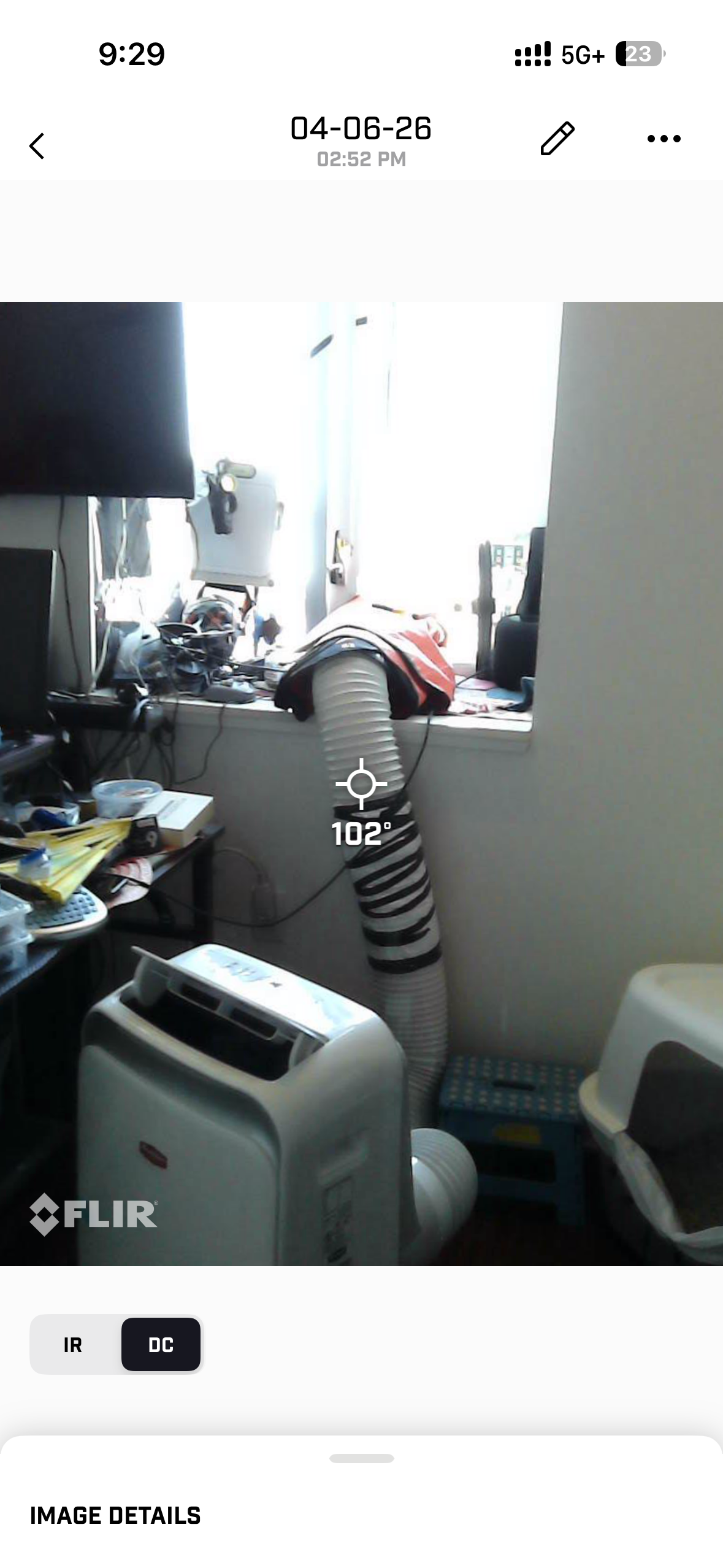
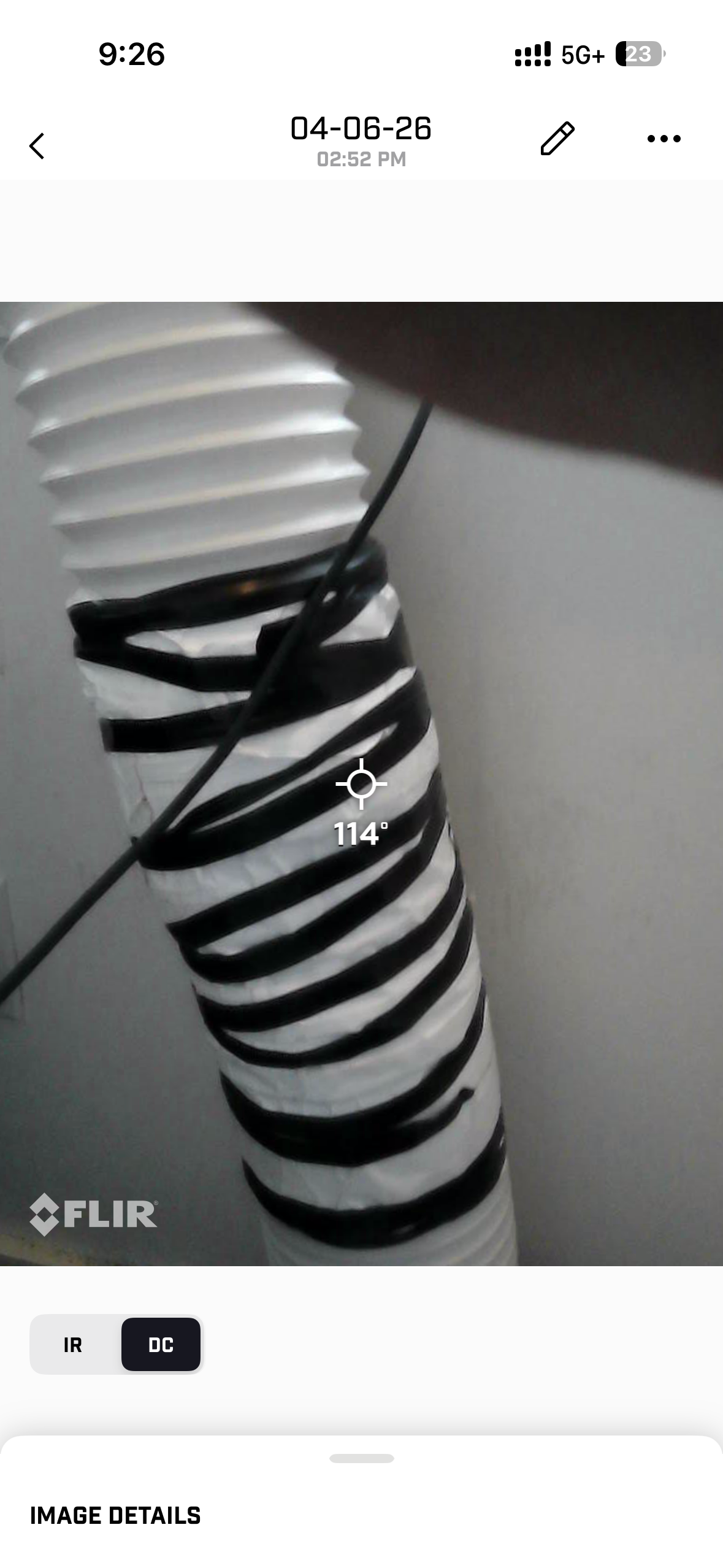
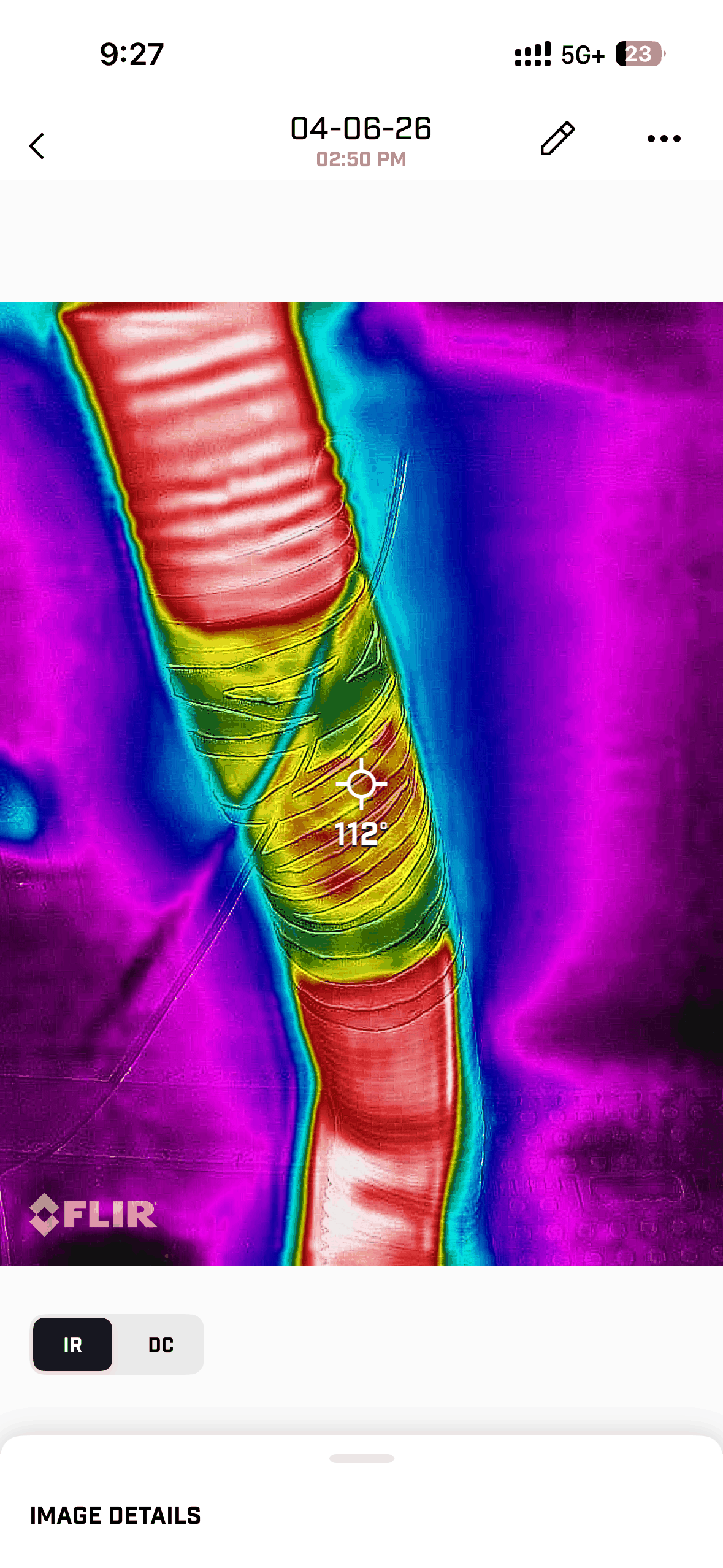
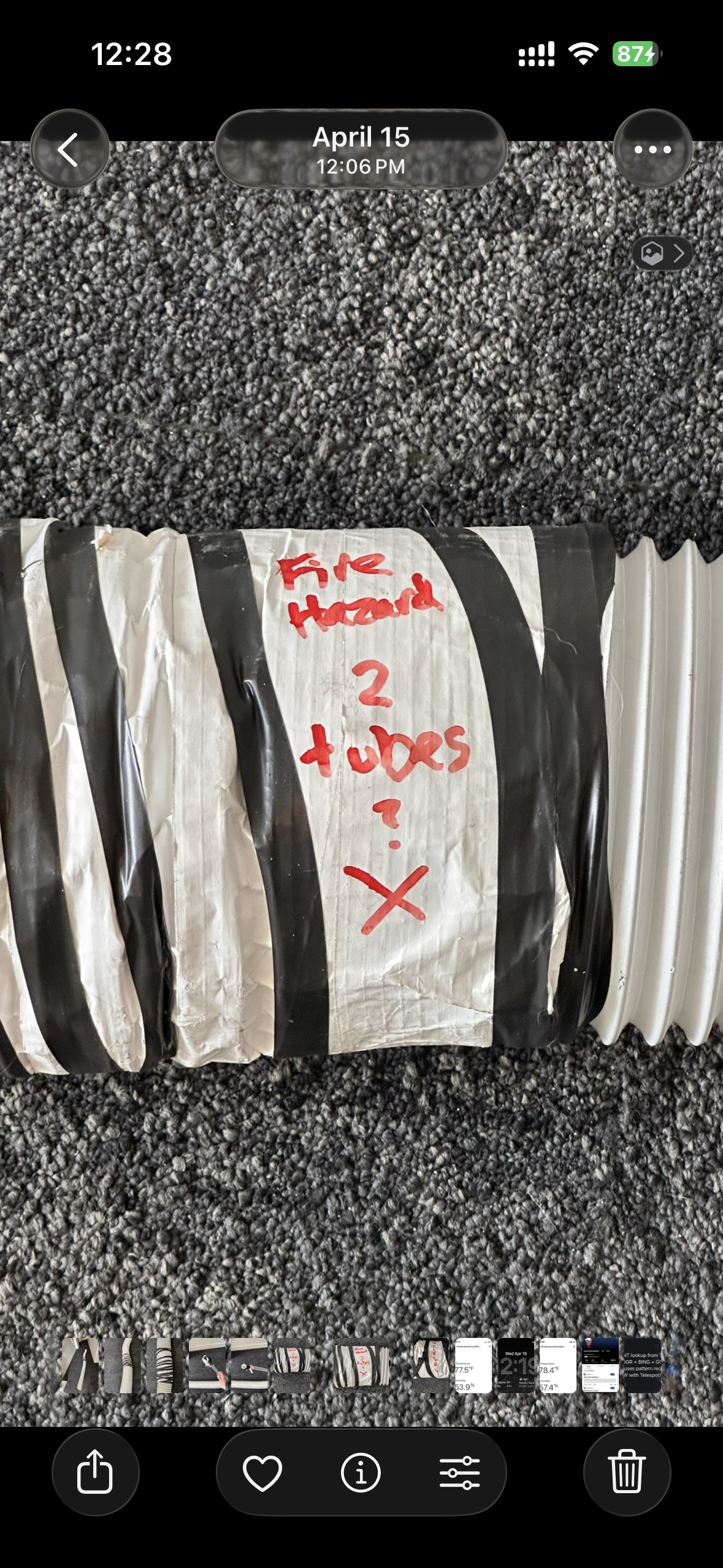
Around April 14, 2026 — during the final weeks of Philadelphia's mandatory heating season (Philadelphia Property Maintenance Code PM-602.3 requires heat from October 1 through April 30) — an L&I inspector visited Unit 806 in response to a heating complaint. The heat in the unit was not working. At that point, Horn did not yet know about VOC off-gassing; the concern was negative pressure, poor ventilation, and no functional heating. The portable AC unit that Greystar had installed as a stopgap was already in the unit, exhaust hose in place.
The inspector announced himself at the door and noted he was not the same inspector Horn had previously spoken with, but that he had been to this building many times. That last detail was offered as reassurance. Horn found it concerning — a building that an experienced inspector had visited repeatedly was still operating under an Unfit Structure citation, still collecting rent on an expired license, still without working HVAC. The inspector mentioned he had been doing this work for 25 years.
To document the temperature for the heating complaint, the inspector used a standard infrared temperature gun pointed at a reflective wall surface. An IR temperature gun measures temperature passively — the laser dot is only an aiming guide and plays no role in the reading. The sensor detects infrared radiation at whatever surface it is aimed at. On a reflective surface with low emissivity, the instrument reads a mix: a small fraction of the surface's own emitted radiation, and a large fraction of reflected radiation from the environment. The formula is: Reading ≈ ε × T_surface + (1−ε) × T_reflected. For a reflective surface where ε ≈ 0.05, 95% of the signal is reflected — on a mirror-like surface, the gun is largely reading its own reflection; on a brushed or matte-metallic surface, it reads the surrounding room. Either way, both the gun and the room are at approximately the same ambient temperature. The result approximates room temperature regardless of actual surface conditions.
The correct method for an ambient reading is to point at a matte, thermally equilibrated surface (flat-painted drywall, for example) — or use a contact thermometer. The inspector — who stated 25 years of experience — chose a reflective surface. Horn found that choice deliberate and strange, though acknowledged it would have had the effect of producing a reading that closed out the heating complaint.
This is not a marginal error. It is a predictable physical consequence of pointing the wrong instrument at the wrong surface. No calibration adjustment, no second reading, and no field judgment corrects for it — only a different instrument or a different surface does.